Blood gas analyzers help clinicians assess oxygenation, ventilation, acid-base balance, electrolytes and metabolic status from a small whole-blood sample. Their value is greatest when the result is available close to the patient and quickly enough to support time-sensitive evaluation in emergency departments, intensive care units, operating rooms and respiratory care.
The clinical question should come before the specification list. Hospitals need a system that measures the right parameters, accepts the appropriate sample, fits the workload and supports reliable quality control.
What Information Can Blood Gas Analyzers Provide?
The core measured parameters—pH, pCO₂ and pO₂—help answer three immediate questions:
Is the patient acidemic or alkalemic? pH shows the overall direction of the acid-base disturbance.
Is ventilation adequate? pCO2 reflects carbon dioxide removal and helps identify hypoventilation or hyperventilation.
Is arterial oxygenation adequate? pO₂ provides direct information about oxygen pressure when an arterial specimen is used.
Modern blood gas systems may also measure sodium, potassium, chloride, ionized calcium, glucose, lactate and hematocrit. These results are useful when respiratory and metabolic problems occur together, such as electrolyte disturbance during a metabolic crisis or raised lactate when impaired perfusion is suspected.
Values such as bicarbonate, base excess, oxygen saturation and anion gap are calculated from measurements. They should be identified as calculated. The useful menu is the one that answers the department’s clinical questions.
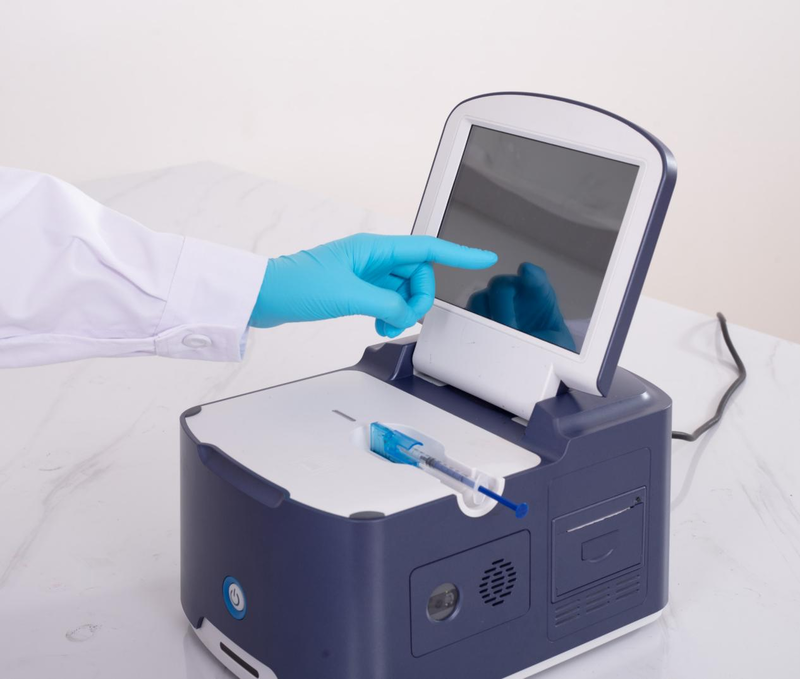
Blood Gas Platform
Emergency and Critical Care Applications
Rapid Assessment in the Emergency Department
In an emergency room, blood gas testing is used for severe breathing difficulty, shock, sepsis, major trauma, cardiac arrest, altered consciousness and metabolic emergencies. It can provide a rapid picture of respiratory and metabolic function while other investigations continue.
A low pH alone does not show whether the main problem is respiratory or metabolic. Reviewing it with pCO₂, bicarbonate, lactate, glucose and electrolytes provides a more useful pattern.
Monitoring in the ICU
Blood gas analyzers are central to many ICU workflows because critically ill patients can change rapidly and may require repeated assessment. Common applications include:
- Evaluating mixed acid-base disorders
- Monitoring ventilation and oxygenation
- Following lactate and perfusion trends
- Checking electrolytes during intensive treatment
- Monitoring patients after resuscitation or major surgery
- Supporting assessment during renal, respiratory or metabolic deterioration
Mechanical Ventilation Management
pCO₂ helps show whether ventilation is removing carbon dioxide adequately, while arterial pO₂ contributes to oxygenation assessment. Repeated blood gas results can support evaluation after changes in respiratory support, but they must be interpreted with ventilator settings, inspired oxygen, pulse oximetry and the patient’s clinical condition.
A point-of-care blood gas analyzer can reduce transport delays, but bedside testing increases responsibility for the POCT program. Training, QC, sample acceptance and connectivity still require coordinated oversight.
Applications in Surgery, Anesthesia and Respiratory Care
Operating Room and Anesthesia
During high-risk surgery, clinicians may need rapid information about ventilation, oxygenation, acid-base status, electrolytes, ionized calcium, lactate and hematocrit. These results can be relevant when there is major blood loss, fluid replacement, prolonged anesthesia or altered tissue perfusion.
A blood gas analyzer used in the operating room should support operation while wearing gloves, repeated testing, and result retention during network or power interruptions. Teams should also define how temperature-corrected and standard 37°C results are reported when relevant.
Respiratory and Pulmonology Departments
Blood gas testing supports acute respiratory failure, severe asthma, COPD exacerbation, hypoventilation and hypercapnia. Pulse oximetry provides continuous non-invasive saturation monitoring, whereas arterial blood gas testing directly measures pH, pCO₂ and pO₂ at one point in time. The methods are complementary.
Neonatal and Pediatric Care
Small sample volume matters for neonates and children requiring repeated tests. Capillary samples may support selected acid-base questions, but capillary or venous pO₂ is not equivalent to arterial pO₂. Assess minimum volume, sampling consistency, clot detection and manual handling.
Ambulance, Transport and Remote Settings
A portable blood gas analyzer may support prehospital care, transport or locations with limited laboratory access. Buyers should assess battery capacity, operating temperature, cartridge storage, data retention and synchronization after network interruption—not weight alone.
Choosing the Right Sample Type
Arterial, venous and capillary samples do not answer every question equally well.
|
Sample type
|
Main advantage
|
Important limitation
|
|
Arterial blood
|
Most appropriate for direct assessment of oxygenation
|
More invasive and requires trained collection
|
|
Venous blood
|
Useful for selected acid-base and metabolic assessments
|
Venous pO₂ cannot replace arterial pO₂
|
|
Capillary blood
|
Requires a small sample and may suit neonatal care
|
Oxygenation results require careful interpretation
|
Published clinical references commonly report that venous pH is approximately 0.02–0.05 lower than arterial pH, while venous pCO₂ is about 2–8 mmHg higher. The arterial-venous difference in pO₂ is much larger and less predictable.
Whatever the specimen, pre-analytical control is essential. Air bubbles, delayed testing, incorrect heparin, inadequate mixing, clots and contamination from an arterial line can alter results. Collection time, sample type, inspired oxygen and relevant ventilation information should accompany the sample.
Portable and Automatic Blood Gas Systems
Wondfo's Blood Gas Platform provides two configurations for different workflows.
BGA-102: Compact Testing Near the Patient
The Wondfo Blood Gas Analyzer (BGA-102) is a compact whole blood gas analyzer designed for areas such as the ICU, emergency department, operating room, pulmonology department and ambulance. It requires 80 μL of whole blood and, depending on the test cartridge configuration, can measure up to 10 parameters, including pH, pCO₂, pO₂, sodium, potassium, ionized calcium, chloride, hematocrit, glucose and lactate.
The analyzer measures 302 × 226 × 180 mm and weighs less than 6.5 kg including the battery. It includes a thermal printer and LIS/HIS connectivity. Its compact design makes it suitable when the testing location, rather than high recurring sample volume, is the main consideration.
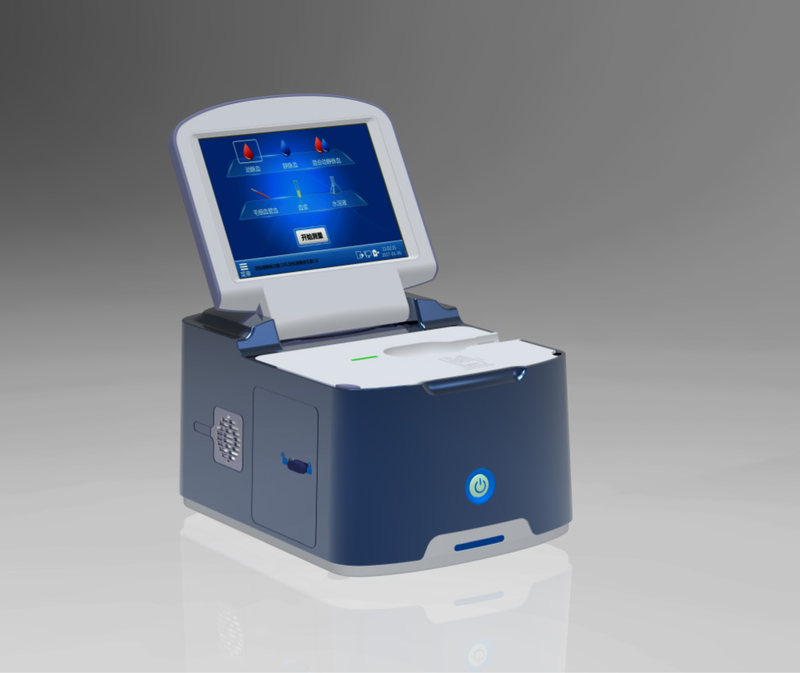
Wondfo Blood Gas Analyzer (BGA-102)
Ucare-6000: Automated Workflow
The Ucare-6000 automatic blood gas analyzer accepts arterial, venous and capillary blood, requires a minimum sample volume of 90 μL and provides results in 120 seconds. It reports 10 measured parameters and 24 calculated parameters covering blood gases, electrolytes, metabolites and hematocrit.
Its integrated solution pack combines the test card, calibration and internal quality control. The system supports automated calibration and IQC, self-cleaning of the sample inlet, bubble and clot management, barcode scanning and LIS or data-management connection. Its rechargeable battery provides six hours of standby and at least 80 tests during a power interruption.
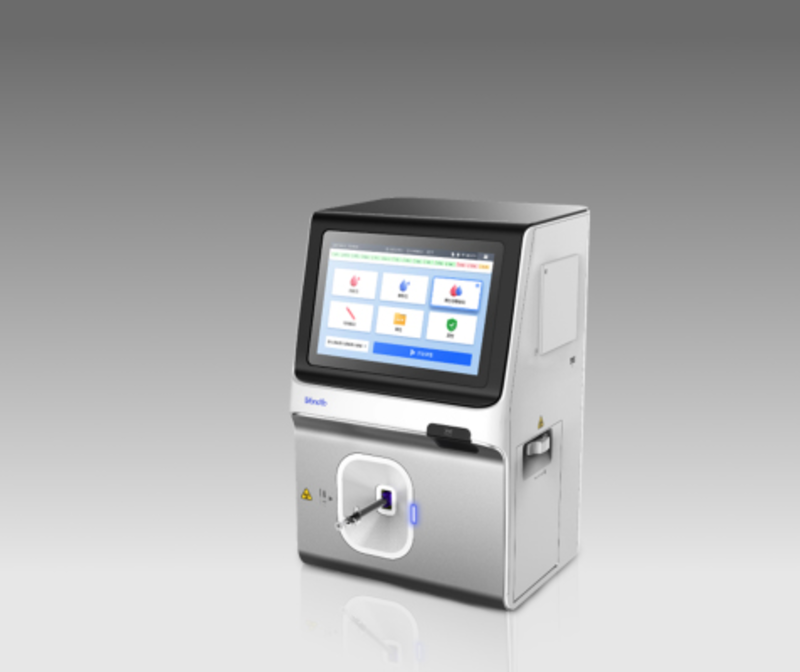
Ucare-6000 Automatic Blood Gas Biochemical Analyzer
|
Workflow consideration
|
BGA-102
|
Ucare-6000
|
|
Primary fit
|
Portable and distributed Point of Care Testing
|
Automated recurring departmental testing
|
|
Minimum sample volume
|
80 μL
|
90 μL
|
|
Sample types
|
Whole blood; confirm approved cartridge and collection type
|
Arterial, venous and capillary blood
|
|
Measured menu
|
Up to 10 parameters
|
10 parameters plus 24 calculated values
|
|
Portability
|
Less than 6.5 kg, built-in battery
|
Up to 13.2 kg, six-hour battery standby
|
|
Workflow
|
Compact cartridge-based testing
|
One-step loading with automated calibration and IQC
|
Actual test menus, cartridges and regulatory availability should be confirmed for the target country.
What Hospitals Should Check Before Purchase
Whether evaluating a portable blood gas analyzer or a larger blood gas analyzer machine, buyers should use the same written criteria:
1. Clinical fit: Which departments, sample types and parameters are required?
2. Peak workload: How many samples may arrive in the busiest hour?
3. Practical turnaround: How long does the full process take from collection to an available result?
4. Analytical evidence: Are precision, measuring range, interference and method-comparison data available for priority parameters?
5. Quality management: How are calibration, IQC, external controls and operator access managed?
6. Connectivity: Can patient information, results, QC and error flags move through LIS/HIS or DMS?
7. Operating environment: Are battery, temperature and storage conditions suitable?
8. Service and supply: Are training, reagents, spare parts and technical support available locally?
9. Total ownership cost: Include reagents, QC, connectivity, training, service, waste and downtime—not only the analyzer price.
A maintenance free blood gas analyzer can reduce routine fluid-path work, but “maintenance-free” does not mean “quality-control-free.” Every system still requires documented QC, operator competency, result review and a plan for downtime.
FAQ
Q1. What are blood gas analyzers mainly used for?
A: They assess oxygenation, ventilation, acid-base balance and, depending on the system, electrolytes, glucose, lactate and hematocrit in emergency, critical care, surgical and respiratory settings.
Q2. Is venous blood suitable for blood gas analysis?
A: Venous blood may support selected acid-base and metabolic assessments, but it cannot replace arterial blood when accurate oxygenation information is required.
Q3. Is a portable analyzer always the better POCT choice?
A: No. A portable system suits distributed and lower-volume testing, while an automatic system may better support recurring departmental volume, automated QC and centralized data management.
Match the Analyzer to the Clinical Workflow
The most useful blood gas system is not necessarily the one with the most reported parameters. It is the one that provides the required information from the appropriate specimen, at the right location, with reliable quality control and manageable operating cost.
Before requesting a configuration or quotation, healthcare facilities should first clarify their intended departments, peak testing volume, required test parameters, accepted specimen types, and connectivity requirements. Contact Wondfo to discuss your clinical workflow and testing requirements, and our team will recommend a blood gas solution tailored to your department needs.



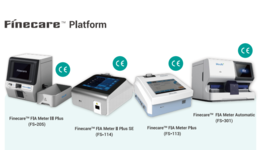
 The first developed technology platform with various application scenarios, including infectious disease, fertility, DOA, etc.
 50+ kinds of reagents and five high-performance devices, focusing on detecting cardiovascular disease, inflammation, kidney injury, sex hormones, thyroid function, diabetes, tumor, and others.
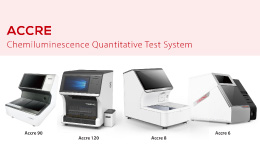 Single-dose Chemiluminescense Immunoassay Platform
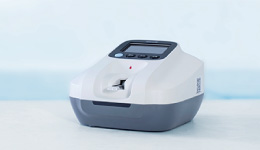 Wondfo optical blood coagulation analyzer is the first one in the world that can test PT, APTT, TT, FIB, and ACT simultaneously.
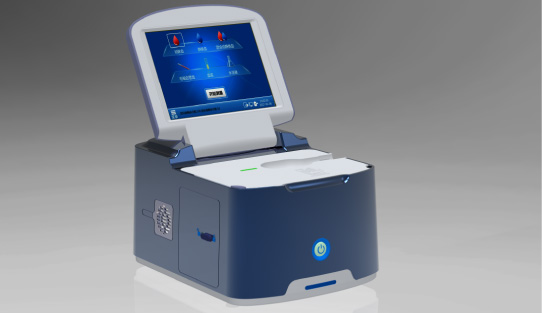 Our Blood Gas Analyzer BGA-102 can produce the result in 30s. Its advantages of portability, easy operation, durability, and high performance make it ideal for clinics, laboratories, and hospitals.
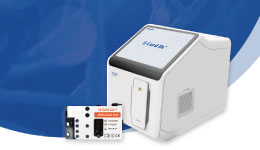 Ready-to-use lyophilized RT-PCR Reagent;
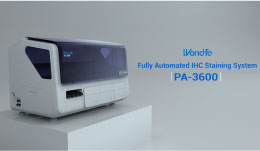 Wondfo PA-3600 IHC Staining System
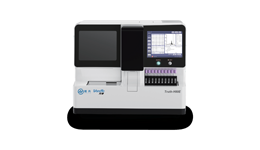 The Wondfo Truth-H80E HPLC Hemoglobin Analyzer is a high-performance diagnostic device designed for rapid and precise measurement of glycosylated hemoglobin (HbA1c)—the gold standard for diabetes diagnosis.It support the standard mode and variant mode and provide the result within 60-90seconds.
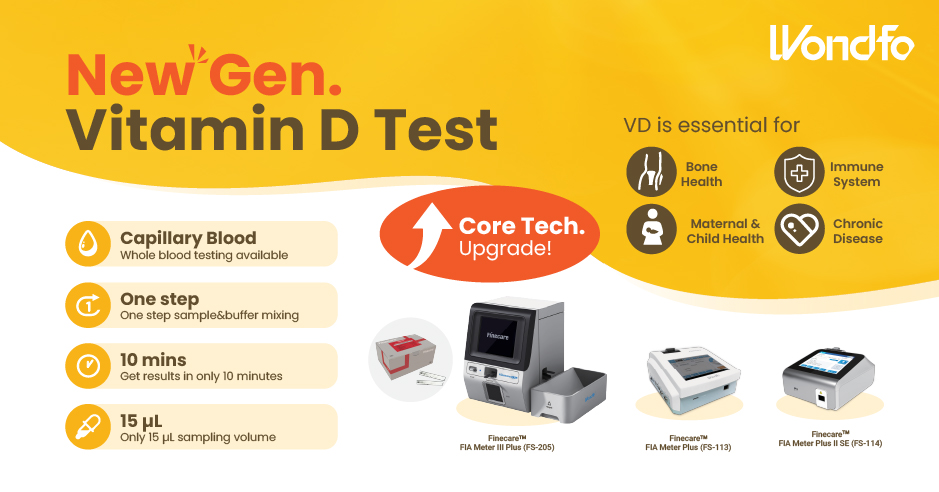 Finecare™ Vitamin D, from complexity to simplicity
 Building A World Free from Antibitoic Overuse
 Advanced rapid diagnostic test with WHO prequalification for infectious disease
 The Future Intelligent Medical Assistant to Healthcare
 Fight against the pandemic through continuous innovation



 Request


