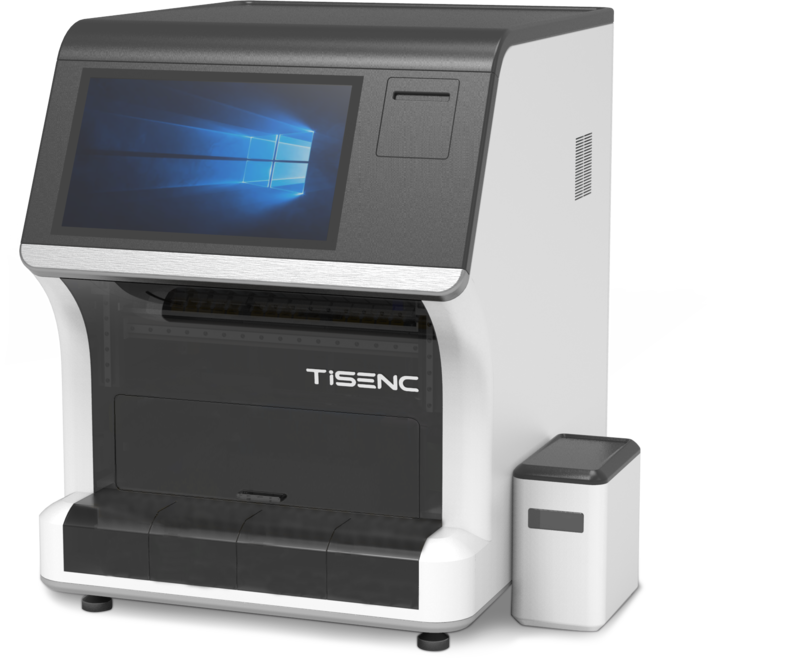
Clinical laboratories rarely choose an immunoassay analyzer on throughput alone. Emergency teams need short turnaround times, laboratory managers need controlled processes, and procurement teams need a system that fits the available space, staffing and test volume. The Accre 120 Automatic Chemiluminescence Immunoassay Analyzer brings automated sample handling, a broad chemiluminescence menu and STAT testing into a bench top system intended for emergency care, primary care and laboratories.
Wondfo's Accre 120 Automatic Chemiluminescence Immunoassay Analyzer specifies up to 100 tests per hour and a 10 minute first result. This capacity may suit laboratories that have outgrown small workflows but do not need a large central platform. The key question is whether the analyzer provides the right assays, quality controls and workflow for the local patient population.
Accre 120 Specifications at a Glance
|
Evaluation point
|
Accre 120 information
|
Why it matters
|
|
Methodology
|
Chemiluminescence immunoassay
|
Supports sensitive quantitative and qualitative immunoassay workflows
|
|
Throughput
|
Up to 100 tests per hour
|
Helps laboratories plan routine and peak demand
|
|
First result
|
12 minutes
|
Relevant to time sensitive cardiac, inflammatory and emergency testing
|
|
Processing
|
Batch and STAT modes
|
Allows routine work and urgent requests on the same platform
|
|
Reaction channels
|
20 channels across 4 modules
|
Supports simultaneous processing of different parameters
|
|
Sample types
|
Whole blood, serum and plasma
|
Reduces the need to maintain separate platforms for common sample types
|
|
Interface
|
15.6 inch touch screen with 24 hour standby
|
Supports continuous laboratory availability and operator access
|
|
Volume
|
570 mm by 685 mm by 740 mm
|
Suitable for laboratories with limited space
|
|
Weight
|
80kg
|
Requires a stable bench and a confirmed installation route
|
|
Connectivity
|
LIS and HIS connection, RS232, USB and internet connection
|
Helps reduce manual transcription and supports result management
|
|
Maintenance
|
600 days MTBF, with no consumable needed for maintenance
|
Reduce routine maintenance burden, subject to local service requirements
|
How the System Combines Speed with a Controlled CLIA Process
The Accre 120 automatic CLIA analyzer uses mono test, ready to use cartridges. Each cartridge contains the components needed for an individual assay, which can simplify reagent preparation and reduce the risk of carryover between tests. A built in scanner reads reagent information automatically, while primary tube sampling and barcode identification reduce manual entry steps.
The assay process has four main stages. Incubation is controlled at 37 degrees Celsius. Nano magnetic particles support separation. Alkaline phosphatase catalyzes the reaction with APS 5 substrate. A photomultiplier tube captures the light signal. This combines point of care convenience with automated reaction control and signal measurement.
Four modules and 20 channels allow different parameters to run simultaneously. Batch mode supports routine testing, while STAT mode accommodates urgent work. A laboratory can process scheduled endocrine tests while retaining access for time sensitive cardiac requests.
A Workflow Scenario for Emergency and Routine Testing
Consider a laboratory receiving scheduled thyroid samples while supporting cardiac requests from the emergency department. A system selected only for batch throughput may create a queue when an urgent troponin request arrives. Accre 120 addresses mixed demand through simultaneous parameter processing and STAT mode.
The 12 minute first result is especially relevant when the selected assay also has a short reaction time and the sample can enter the workflow without a long preanalytical delay. Whole blood support may reduce preparation time for eligible assays. Actual clinical turnaround time still includes collection, transport, identification, centrifugation when required, review and result release. Laboratories should therefore measure total turnaround time from sample collection to reported result, rather than quoting analyzer reaction time as the complete patient journey.
Test Menu Coverage for Different Clinical Needs
The current Accre 120 Automatic Chemiluminescence Immunoassay Analyzer materials organize the test menu across cardiac, inflammation, fertility, tumor, thrombosis, anemia, infectious disease, bone metabolism, immunoglobulin, autoimmune, thyroid, TORCH, diabetes and other categories.
Representative items include cTnI, high sensitivity cTnI, CK MB, BNP, PCT, IL 6, CRP, TSH, FT4, CEA, AFP and CA125. This combination can support urgent cardiac and inflammation testing alongside routine endocrine and tumor marker work.
Buyers should request the current country specific menu, regulatory status, sample requirements, measuring ranges, quality control requirements and reagent shelf life. A globally listed assay may not be supplied in every market.
What Laboratory Performance Should Mean to a Buyer
Terms such as accurate, consistent and excellent reagent performance are useful product goals, but laboratories should translate them into measurable acceptance criteria. A structured evaluation should include precision, method comparison, detection capability, carryover, interference, linearity and quality control performance for the assays that will be used most frequently.
Before routine use, each laboratory should create a verification plan that reflects local requirements. The plan should define the sample range, acceptable precision, allowable bias, detection capability, carryover limits, interference checks and quality control rules. Document acceptance criteria before testing so that results are assessed against clinical needs.
Select assays that represent the intended workload. Compare patient samples across clinically important concentrations, review bias near medical decision points and document acceptance limits before testing. This is more useful than relying on a single correlation coefficient or a general accuracy statement.
Accre 120 Compared with Common Analyzer Formats
|
Decision factor
|
Accre 120
|
Small POCT CLIA system
|
Large central laboratory CLIA system
|
|
Primary role
|
Mixed routine and urgent testing
|
Low volume or targeted decentralized testing
|
High volume centralized testing
|
|
First result priority
|
12 minute first result specified
|
Often prioritized
|
Depends on queue and assay
|
|
Throughput
|
Up to 100 tests per hour
|
Usually lower
|
Usually higher
|
|
Sample workflow
|
Primary tube sampling, whole blood, serum and plasma
|
Often manual sample application
|
Highly automated sample handling
|
|
Test menu
|
Broad menu across multiple clinical areas
|
Often more focused
|
Broad, with high volume consolidation
|
|
Space requirement
|
Bench top, 570 mm by 685 mm by 740 mm
|
Smaller
|
Larger and may require dedicated utilities
|
|
Best fit
|
Laboratories balancing responsiveness and menu breadth
|
Clinics and low volume satellite sites
|
Core laboratories with sustained high demand
|
A site performing few daily tests may prefer a smaller platform, while a core laboratory with a concentrated peak may need higher capacity. Accre 120 is most relevant where urgent access, menu consolidation and bench top capacity have similar importance.
Five Questions to Ask Before Purchase
1. Does the Local Assay Menu Match Our Workload?
Map test volume by assay and department, then confirm which Accre assays are registered and supplied locally.
2. What Is the Real Cost per Reportable Result?
Include reagents, calibration, quality control, repeats, waste, service, labor and downtime. Cartridge savings depend on test frequency and shelf life.
3. Can the System Handle Our Peak, Not Only Our Daily Average?
Review the busiest period, urgent sample frequency and assay mix. Request a workflow simulation using representative volumes.
4. How Will Results Enter the Laboratory Information System?
Confirm interface scope, barcode rules, cybersecurity requirements and middleware costs before installation.
5. What Service Support Is Available Locally?
Clarify training, preventive maintenance, response time, spare parts and backup arrangements. Assess the 600 day MTBF together with the local service plan.
FAQ
Q1. Is Accre 120 a POCT Analyzer or a Laboratory Analyzer?
A: It is a fully automatic bench top CLIA analyzer with a POCT style workflow, laboratory automation and a broad test menu. Listed applications include emergency care, primary care and laboratories.
Q2. How Fast Is Accre 120Automatic Chemiluminescence Immunoassay Analyzer?
A: Wondfo's current product specifications state up to 120 tests per hour and 10 minutes for the first result. Actual turnaround depends on the assay, sample preparation, workload and result review.
Q3. Does Accre 120 Automatic Chemiluminescence Immunoassay Analyzer Accept Whole Blood?
A: Yes. The listed sample types are whole blood, serum and plasma. Users should confirm the permitted sample type and volume for each individual assay.
Q4. How Many Tests Can Be Processed at the Same Time?
A: The system has four modules with 20 channels in total and can process different parameters simultaneously. Throughput should be confirmed using the laboratory's planned assay mix.
Q5. What Should Be Verified Before Installation?
A: Verify configuration, local assays, bench capacity, utilities, LIS connection, validation, quality control, training and service coverage.
Conclusion
Accre 120 Automatic Chemiluminescence Immunoassay Analyzer is designed for laboratories that need more automation than a small POCT system but a more compact workflow than a central platform. Its 12 minute first result, throughput of up to 100 tests per hour, 20 channels, STAT mode and broad menu support responsiveness and consolidation.
The decision should begin with local needs. Match the menu to clinical demand, verify performance, calculate cost per reportable result and confirm service support. Contact the Wondfo team to request the current specification, country specific assay menu, product demonstration, workflow assessment and commercial quotation.



 The first developed technology platform with various application scenarios, including infectious disease, fertility, DOA, etc.
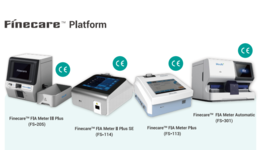 50+ kinds of reagents and five high-performance devices, focusing on detecting cardiovascular disease, inflammation, kidney injury, sex hormones, thyroid function, diabetes, tumor, and others.
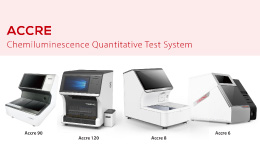 Single-dose Chemiluminescense Immunoassay Platform
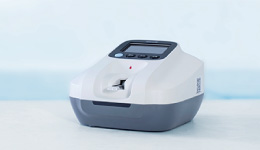 Wondfo optical blood coagulation analyzer is the first one in the world that can test PT, APTT, TT, FIB, and ACT simultaneously.
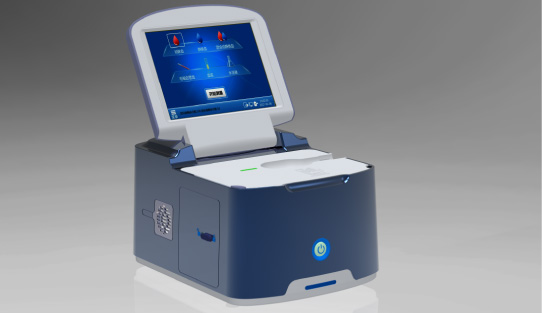 Our Blood Gas Analyzer BGA-102 can produce the result in 30s. Its advantages of portability, easy operation, durability, and high performance make it ideal for clinics, laboratories, and hospitals.
 Ready-to-use lyophilized RT-PCR Reagent;
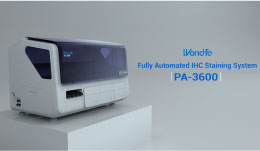 Wondfo PA-3600 IHC Staining System
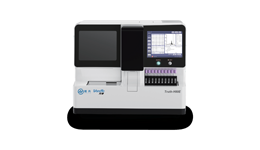 The Wondfo Truth-H80E HPLC Hemoglobin Analyzer is a high-performance diagnostic device designed for rapid and precise measurement of glycosylated hemoglobin (HbA1c)—the gold standard for diabetes diagnosis.It support the standard mode and variant mode and provide the result within 60-90seconds.
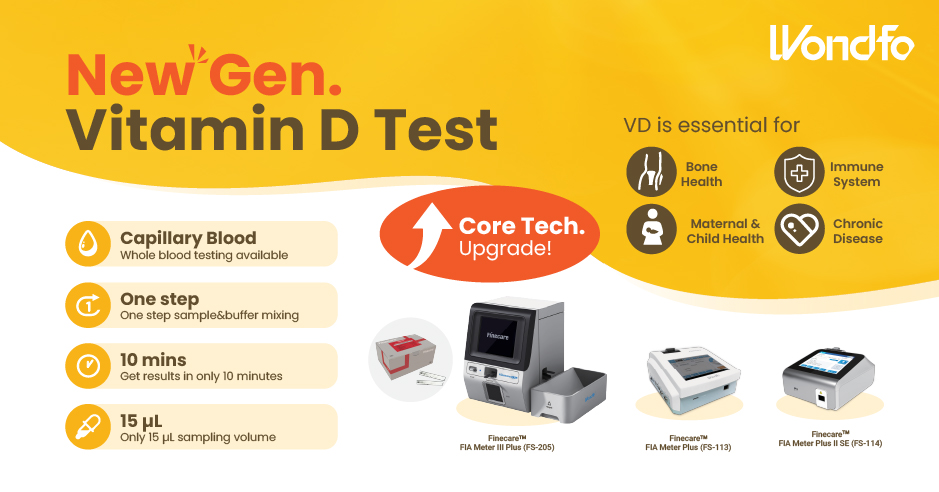 Finecare™ Vitamin D, from complexity to simplicity
 Building A World Free from Antibitoic Overuse
 Advanced rapid diagnostic test with WHO prequalification for infectious disease
 The Future Intelligent Medical Assistant to Healthcare
 Fight against the pandemic through continuous innovation



 Request


