Quick Answer
ANA, Anti-CCP and Anti-dsDNA detect different autoantibodies. ANA is a broad marker associated with several systemic autoimmune diseases, Anti-CCP is closely associated with rheumatoid arthritis, and Anti-dsDNA is primarily associated with systemic lupus erythematosus. Results should be interpreted with clinical and other laboratory findings.
For laboratories, the right testing setup also depends on assay availability, sample volume and automation needs. Wondfo offers the single-dose ACCRE Series and the tube-based automated SmarLumi™ FC-2100 for different chemiluminescence workflows.
ANA, Anti-CCP and Anti-dsDNA at a Glance
ANA, Anti-CCP and Anti-dsDNA do not detect the same antibodies and should not be treated as interchangeable.
|
Test
|
Main Association
|
Typical Testing Role
|
Workflow Consideration
|
|
ANA
|
Several systemic autoimmune rheumatic diseases
|
Broad initial evaluation when clinically indicated
|
May lead to more specific autoantibody testing
|
|
Anti-CCP
|
Rheumatoid arthritis
|
Supports RA assessment with other clinical findings
|
May be requested with RF or inflammation-related tests
|
|
Anti-dsDNA
|
Systemic lupus erythematosus
|
Supports SLE assessment and selected follow-up testing
|
Method and result consistency may be important over time
|
For laboratories, biomarker selection is only one part of the decision. Test volume, STAT demand, reagent handling, assay availability and laboratory information system connectivity can also affect the choice of testing platform.
How Sensitive and Specific Are These Autoimmune Markers?
Sensitivity describes how often a test is positive among people who have the relevant disease. Specificity describes how often it is negative among people who do not have that disease. These values are influenced by the testing method, antigen composition, cutoff, patient population and reference standard, so they should not be treated as fixed specifications for every commercial assay.
|
Marker
|
Main Autoimmune Disease
|
Sensitivity
|
Specificity
|
|
ANA
|
Systemic lupus erythematosus
|
97.8%
|
74.7%
|
|
ANA
|
Systemic sclerosis
|
Approximately 85%
|
Approximately 54%
|
|
ANA
|
Sjögren’s syndrome
|
Approximately 48%
|
Approximately 52%
|
|
Anti-CCP
|
Rheumatoid arthritis
|
67%
|
95%
|
|
Anti-dsDNA
|
Systemic lupus erythematosus
|
52.4%
|
94.2%
|
ANA is highly sensitive for SLE at a 1:80 HEp-2 IIF threshold, but its lower specificity means positive results can also occur in other autoimmune diseases and healthy people.
For systemic sclerosis and Sjögren’s syndrome, ANA patterns and disease-associated antibodies may provide more specific information.
Anti-CCP and Anti-dsDNA have lower sensitivity but higher disease specificity for rheumatoid arthritis and SLE, respectively. Negative results do not exclude either disease.
Reference data source:
Arthritis Care & Research. 2018;70(3):428–438.
British Journal of General Practice. 2014;64(626):e599–e601.
Diagnostics. 2023;13(5):851.
Annals of Internal Medicine. 2007;146(11):797–808.
How Common Is a Positive ANA in Healthy People?
A positive ANA result is not limited to people with autoimmune disease. When ANA is measured by HEp-2 indirect immunofluorescence, the proportion of apparently healthy people with a positive result changes substantially with the reporting threshold:
· At 1:40, approximately 31.7% may test positive.
· At 1:80, approximately 13.3% may test positive.
· At 1:160, approximately 5.0% may test positive.
· At 1:320, approximately 3.3% may test positive.
This decline illustrates why the ANA titer matters. A low reporting threshold increases sensitivity but also identifies more people without autoimmune disease. A higher threshold improves specificity, although it may miss some affected patients. Laboratories should therefore report the method, screening dilution or cutoff, titer and staining pattern where applicable.
What Does an ANA Test Detect?
An antinuclear antibody, or ANA, test detects autoantibodies that react with components in or around a cell’s nucleus. These antibodies may be associated with systemic autoimmune rheumatic diseases such as systemic lupus erythematosus, Sjögren’s syndrome, systemic sclerosis and mixed connective tissue disease.
ANA as a Broad Autoimmune Marker
ANA is a broad marker rather than a test for one specific disease. It may be used as part of an initial evaluation when symptoms and clinical findings suggest a systemic autoimmune condition.
A positive ANA result shows that antinuclear antibodies were detected using the laboratory’s selected method and reporting criteria. However, it does not identify a specific disease on its own. Antinuclear antibodies may also occur in people without autoimmune disease or in association with infections, certain medicines and other health conditions. A negative result may make some ANA-associated conditions less likely, but it does not exclude every autoimmune disease.
Laboratory Considerations for ANA Testing
Laboratories should consider the method, expected request volume, turnaround requirements, reporting format, quality-control procedures and possible follow-up testing. These factors help determine whether a flexible on-demand system, a higher-capacity automated platform or a combination of both is more suitable.
What Does an Anti-CCP Test Detect?
An Anti-CCP test detects antibodies against cyclic citrullinated peptides. These antibodies belong to the broader group of anti-citrullinated protein antibodies and are closely associated with rheumatoid arthritis.
Why Anti-CCP Matters in RA Assessment
Anti-CCP testing may support the evaluation of suspected RA when relevant symptoms and examination findings are present.
Key points include:
· Anti-CCP antibodies may be detectable before clear RA symptoms develop.
· A positive result can support, but not independently confirm, an RA diagnosis.
· A negative result does not exclude RA.
Anti-CCP vs Rheumatoid Factor
|
Test
|
Main Consideration
|
|
Anti-CCP
|
More closely associated with RA
|
|
Rheumatoid factor
|
May also occur in other diseases or in people without RA
|
The two tests measure different antibodies and are not interchangeable. Results may be considered with inflammatory markers, imaging and clinical findings.
Laboratory Workflow Considerations
Anti-CCP may be requested alone or with RF, CRP and other immunoassays. Laboratories should consider individual versus mixed assay requests, routine and priority turnaround needs, calibration and quality control, and assay-specific units and cutoffs. These factors influence whether an on-demand or higher-capacity workflow is more suitable.
What Does an Anti-dsDNA Test Detect?
An Anti-dsDNA test detects antibodies directed against double-stranded DNA. These autoantibodies are primarily associated with systemic lupus erythematosus and may support its assessment when symptoms and other findings suggest lupus.
Role in Lupus Assessment
Anti-dsDNA testing may:
· Support the evaluation of suspected SLE;
· Provide additional information following an ANA result;
· Assist selected follow-up assessments when clinically appropriate.
A positive result does not confirm SLE on its own, while a negative result does not exclude every case.
ANA vs Anti-dsDNA
|
Test
|
Main Role
|
|
ANA
|
Broad marker associated with several systemic autoimmune diseases
|
|
Anti-dsDNA
|
More specifically associated with SLE
|
Anti-dsDNA is related to the ANA family of autoantibodies, but the two tests are not interchangeable.
Laboratory Workflow Considerations
Anti-dsDNA can be measured using different laboratory methods, and results may vary between assays. Laboratories should consider method-specific units and cutoffs, test volume, turnaround requirements, quality control and consistency when comparing results over time. These requirements can influence assay selection and the appropriate testing workflow.
IIF vs CLIA for Autoimmune Antibody Testing
Indirect immunofluorescence and chemiluminescence immunoassay detect autoantibodies through different analytical approaches. The appropriate method depends on the biomarker, required result format, sample volume, staffing and laboratory workflow.
|
Comparison
|
Indirect Immunofluorescence
|
Chemiluminescence Immunoassay
|
|
Detection principle
|
Patient antibodies bind to cellular substrates, commonly HEp-2 cells, and are visualized by fluorescence microscopy
|
Patient antibodies bind to defined antigens, with the reaction measured through a chemiluminescent signal
|
|
Main strength
|
Broad detection of antibody reactivity and reporting of ANA titers and fluorescence patterns
|
Automated processing, objective signal measurement and more standardized quantitative or qualitative reporting
|
|
Antigen coverage
|
Broad cellular antigen representation
|
Limited to the antigens included in the individual assay
|
|
Interpretation
|
Pattern recognition and endpoint titration may require experienced personnel
|
Instrument software applies defined assay-specific calculations and cutoffs
|
|
Automation
|
Slide preparation, microscopy and pattern interpretation may involve more manual work, although automated IIF systems are available
|
Well suited to automated sample processing, reagent management, result calculation and data transfer
|
|
Workflow
|
Often organized around slide runs or batches
|
Can support on-demand, mixed-parameter or continuous processing, depending on the analyzer
|
|
Limitation
|
Visual interpretation and differences in substrates, dilutions and microscopes can introduce variability
|
Results depend on antigen selection and assay design; different CLIA assays are not automatically interchangeable
|
How Wondfo CLIA Supports Laboratory Efficiency
Laboratory efficiency depends on more than analytical speed. It also involves the number of manual steps required from sample loading to result reporting. Wondfo’s CLIA platform is designed to simplify this process through automated analysis, standardized result calculation and workflow connectivity.
Fewer manual handoffs: Primary-tube and barcode handling on SmarLumi™ FC-2100 can reduce sample transfer and manual identification steps. Automatic dilution and STAT processing further support routine and priority samples without creating separate manual workflows.
More organized reagent management: RFID-supported identification and onboard reagent cooling help laboratories manage loaded reagents and maintain readiness during daily operation. For intermittent requests, the ACCRE Series uses single-dose reagent cartridges to support on-demand testing without depending entirely on fixed batches.
Connected result reporting: Bidirectional LIS connectivity on FC-2100 supports the electronic transfer of test orders and results, reducing repeated data entry and helping maintain traceability throughout the testing process.
Consistent routine operation: Wondfo Chemiluminescence Platform highlights reliable calibration and quality-control functions, carry-over prevention and simplified operation. Together, these features support a more standardized workflow while allowing laboratory staff to focus on result review and exception handling.
From Biomarker Selection to Laboratory Workflow
After defining the required biomarkers, laboratories need to determine how the assays fit into daily operations.
Start with the Assay Menu
Confirm which assays are required now and which may be added later. Availability should be checked for the intended analyzer and target market before selecting a system.
Review Volume and Turnaround Needs
Laboratories should assess:
· Average and peak daily volume;
· Frequency of ANA, Anti-CCP and Anti-dsDNA requests;
· Routine versus STAT samples;
· Individual, mixed or batch orders;
· Expected turnaround time.
Compare Workflow Types
|
Workflow
|
May Be Suitable When
|
|
Single-dose
|
Requests are varied, intermittent or processed on demand
|
|
Tube-based automation
|
Sample volume is higher or continuous processing is required
|
The decision should reflect sample patterns, staffing, automation requirements and growth plans. Reagent storage, automatic dilution, quality control and LIS connectivity may also affect efficiency and traceability.
Wondfo Chemiluminescence Solutions for Autoimmune Testing Workflows
Wondfo Chemiluminescence Platform includes the single-dose ACCRE Series and the tube-based automated SmarLumi™ FC-2100. Laboratories can compare them according to assay demand, sample flow and required automation.
ACCRE Series: Flexible Single-Dose Testing
ACCRE analyzers use single-dose reagent cartridges, allowing laboratories to run assays on demand without relying only on fixed batches.
|
Model
|
Throughput
|
Potential Workflow Fit
|
|
ACCRE 8
|
Up to 36 tests/hour
|
Compact single-dose testing
|
|
ACCRE 90
|
Up to 96 tests/hour
|
Simultaneous processing of different parameters
|
|
ACCRE 120
|
Up to 120 tests/hour*
|
Greater single-dose processing capacity
|
The appropriate model depends on routine and peak volume, turnaround expectations, available space and the required assays.
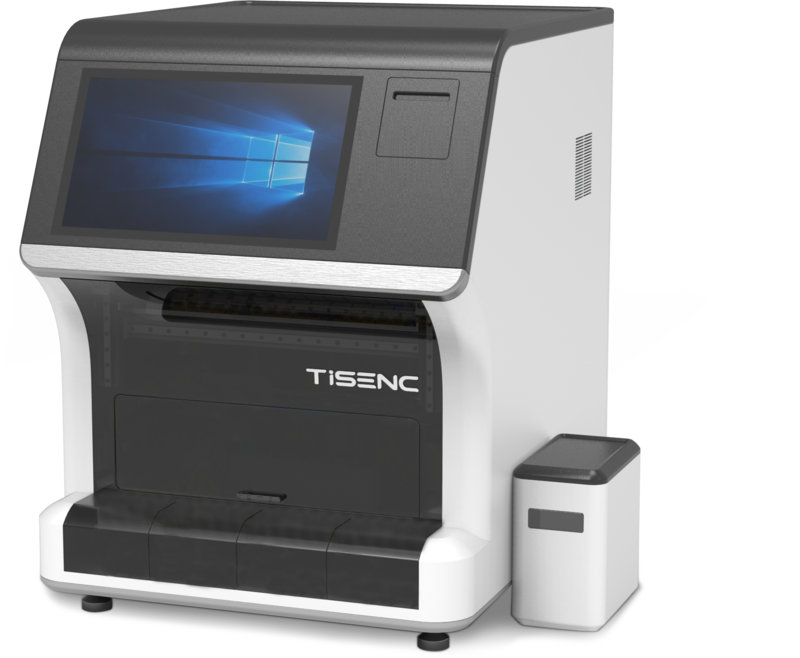
Accre 120—Automatic Chemiluminescence Immunoassay Analyzer
SmarLumi FC-2100: Tube-Based Automated Testing
SmarLumi™ FC-2100 is designed for laboratories requiring greater automation and continuous sample processing. Key specifications include:
· 200 tests/hour;
· First result in less than 12 minutes;
· 60 sample positions and 25 reagent positions;
· STAT support and automatic dilution;
· Refrigerated reagent storage at 2–8°C;
· Primary-tube and barcode handling;
· Bidirectional LIS connectivity;
· A stated footprint of 0.64 m².
These capabilities may suit laboratories with continuous sample arrival, broader workloads or a need to reduce manual handling.
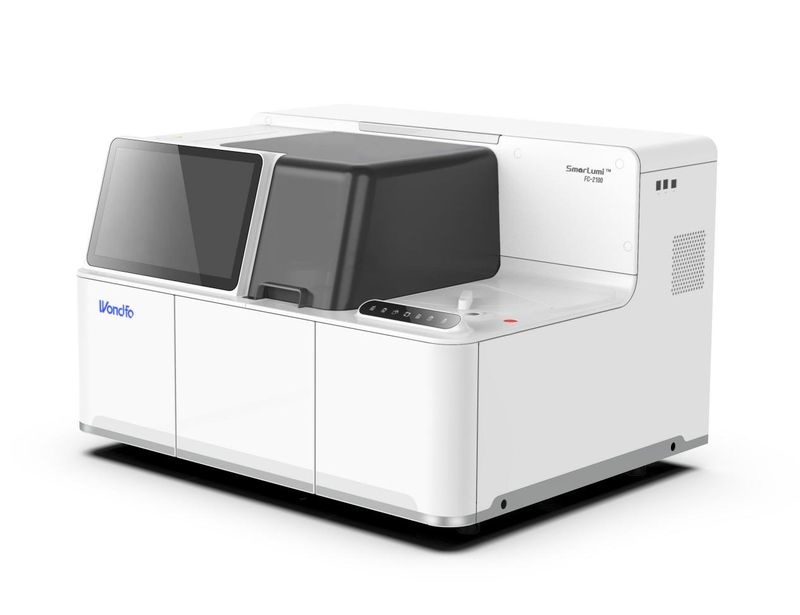
SmarLumi™ FC-2100
How to Choose Between ACCRE and SmarLumi™ FC-2100
Use three steps to identify a suitable workflow.
Step 1: Confirm the Required Assays
Confirm that the required assays are available for the intended analyzer and market before comparing instrument specifications.
Step 2: Choose the Workflow
|
Laboratory Need
|
Consider
|
Main Reason
|
|
Flexible testing with single-dose reagent cartridges
|
ACCRE Series
|
Supports an on-demand single-dose workflow
|
|
Continuous sample loading
|
SmarLumi FC-2100
|
Supports a tube-based automated workflow
|
|
More sample and reagent positions
|
SmarLumi FC-2100
|
Provides 60 sample and 25 reagent positions
|
|
Automatic dilution and bidirectional LIS
|
SmarLumi FC-2100
|
Provides additional automation and connectivity
|
Step 3: Select an ACCRE Model
· ACCRE 8: Provides up to 36 tests/hour in a compact benchtop system.
· ACCRE 90: Supports simultaneous processing of different parameters and provides up to 96 tests/hour.
· ACCRE 120: Provides up to 120 tests/hour for laboratories requiring greater single-dose processing capacity.
Share your country, required assays and expected test volume with Wondfo for a configuration recommendation.
Frequently Asked Questions
Q1. What is the difference between ANA, Anti-CCP and Anti-dsDNA?
A: ANA is a broad marker associated with several systemic autoimmune diseases. Anti-CCP is closely associated with rheumatoid arthritis, while Anti-dsDNA is primarily associated with systemic lupus erythematosus.
Q2. Is ANA the same as Anti-dsDNA?
A: No. ANA detects a broader group of antinuclear antibodies. Anti-dsDNA detects antibodies directed against double-stranded DNA and has a more specific association with lupus.
Q3. Is Anti-CCP the same as rheumatoid factor?
A: No. They detect different antibodies. Both may support rheumatoid arthritis assessment, but they are interpreted with other clinical findings.
Q4. What is a single-dose chemiluminescence analyzer?
A: It uses individually packaged reagent cartridges to support flexible, on-demand testing. Wondfo’s ACCRE 8, ACCRE 90 and ACCRE 120 use a single-dose workflow.
Q5. When should a laboratory consider SmarLumi FC-2100?
A: Consider FC-2100 when continuous processing, higher throughput, automatic dilution, more sample and reagent positions, or bidirectional LIS connectivity are required.
Q6. How can a laboratory confirm assay availability?
A: Contact Wondfo with the target country, required assays and analyzer model. Confirm availability and regulatory status before selecting a configuration.
Q7. My ANA Test Is Positive. Should I Be Worried?
Not necessarily. A positive ANA test does not always indicate an autoimmune disease, as ANA can also be found in healthy individuals. Consult a healthcare professional to interpret the result alongside your symptoms and other clinical findings.
Build the Right Autoimmune Testing Workflow with Wondfo
ANA, Anti-CCP and Anti-dsDNA support different testing needs. Laboratories should evaluate both the required assay menu and the workflow needed to manage routine, mixed and priority samples.
ACCRE Series provides single-dose chemiluminescence options, while SmarLumi™ FC-2100 supports a tube-based automated workflow. Explore the Wondfo Chemiluminescence Platform or contact Wondfo to discuss your assay menu and laboratory workflow.



 The first developed technology platform with various application scenarios, including infectious disease, fertility, DOA, etc.
 50+ kinds of reagents and five high-performance devices, focusing on detecting cardiovascular disease, inflammation, kidney injury, sex hormones, thyroid function, diabetes, tumor, and others.
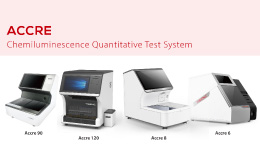 Single-dose Chemiluminescense Immunoassay Platform
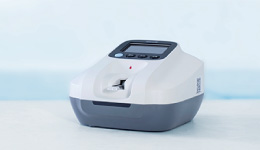 Wondfo optical blood coagulation analyzer is the first one in the world that can test PT, APTT, TT, FIB, and ACT simultaneously.
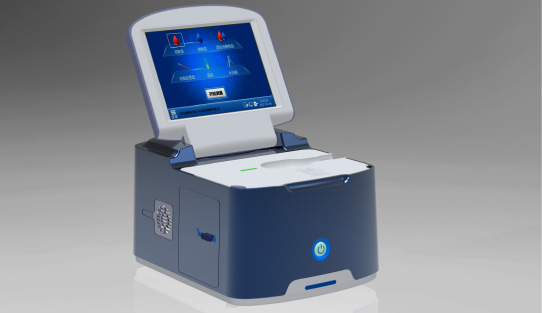 Our Blood Gas Analyzer BGA-102 can produce the result in 30s. Its advantages of portability, easy operation, durability, and high performance make it ideal for clinics, laboratories, and hospitals.
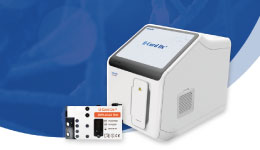 Ready-to-use lyophilized RT-PCR Reagent;
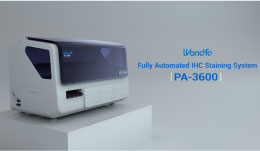 Wondfo PA-3600 IHC Staining System
 The Wondfo Truth-H80E HPLC Hemoglobin Analyzer is a high-performance diagnostic device designed for rapid and precise measurement of glycosylated hemoglobin (HbA1c)—the gold standard for diabetes diagnosis.It support the standard mode and variant mode and provide the result within 60-90seconds.
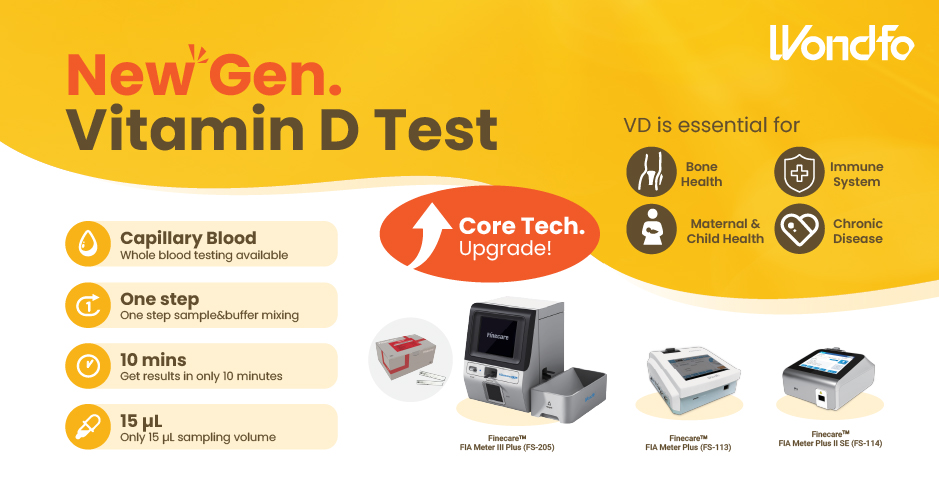 Finecare™ Vitamin D, from complexity to simplicity
 Building A World Free from Antibitoic Overuse
 Advanced rapid diagnostic test with WHO prequalification for infectious disease
 The Future Intelligent Medical Assistant to Healthcare
 Fight against the pandemic through continuous innovation



 Request


