A diabetes follow-up visit is more useful when current HbA1c results are available during the consultation. Without them, patients may need another laboratory appointment, a follow-up call, or a return visit before receiving advice.
HbA1c point-of-care testing can support same-visit diabetes management by bringing testing, clinical assessment, and patient counseling into one appointment. For primary care clinics and endocrinology practices, this creates an opportunity to discuss results and agree on the next steps while the patient is present. Achieving that benefit requires a coordinated workflow, reliable testing, and a clear process for reviewing results.
Challenges of HbA1c Monitoring in Primary Care
HbA1c reflects average blood glucose over approximately three months. It provides information for ongoing diabetes assessment, alongside glucose monitoring and other clinical findings. However, its practical value also depends on when results become available to the clinician.
In a separated testing pathway, patients attend a consultation, receive a laboratory request, complete testing elsewhere, and then wait for further advice. Even when a laboratory reports results that day, scheduling and communication can delay the management discussion.
Different arrangements can support different needs:
| Testing pathway |
Availability during consultation |
Workflow consideration |
| Laboratory testing after the visit |
Results generally require later review |
Staff must arrange communication and document the plan |
| Laboratory testing before the visit |
Results can be available at the appointment |
Patients need to complete testing beforehand |
| Point-of-care testing during the visit |
Results may be available before the consultation ends |
Sampling, testing, and reporting must fit the appointment |
The objective is to make appropriate results available when a management decision is needed. Both advance laboratory testing and in-office testing can contribute to this goal.
How Point-of-Care HbA1c Testing Supports Same-Visit Diabetes Management
Timely Assessment of Glycemic Control
An available HbA1c result gives clinicians an opportunity to review progress during the scheduled appointment. They can compare it with previous measurements and discuss changes in medication use, daily routines, or glucose patterns.
Onsite testing may also help complete monitoring that would otherwise be missed. In one US primary-care quality improvement study across three practices, the rate of missed indicated HbA1c testing at the time of the visit was lower in practices offering point-of-care HbA1c testing: 5.5% (26 of 472 testing opportunities) compared with 20.3% (71 of 350) in practices without it.
Source: Crocker JB, Lynch SH, Guarino AJ, Lewandrowski K. The Impact of Point-of-Care Hemoglobin A1c Testing on Population Health-Based Onsite Testing Adherence: A Primary-Care Quality Improvement Study. J Diabetes Sci Technol. 2020;15(3):561-567. doi:10.1177/1932296820972751
Treatment Review and Patient Counseling
Having results available creates time for a focused discussion about what they mean. A clinician can explore whether the current plan remains appropriate and identify difficulties with medication access, administration, nutrition, or self-monitoring.
Management may involve reinforcing an effective routine, addressing barriers, arranging further assessment, or changing treatment when clinically appropriate. A new HbA1c result does not automatically require a medication change.
A face-to-face discussion also allows patients to ask questions before leaving, rather than interpreting a result without immediate clinical context.
Fewer Additional Visits for Results and Advice
When testing and consultation are coordinated, patients may avoid a separate journey solely for sample collection or result discussion. This can matter for people managing work commitments, transport difficulties, or caregiving responsibilities.
Same-visit care still includes future follow-up. Its purpose is to complete the current assessment and communicate an actionable plan, not to replace continuing diabetes care.
A Practical Workflow for Same-Visit Diabetes Management
Identify Testing Needs and Coordinate Sample Collection
Before or during check-in, the care team should establish whether HbA1c testing is due and appropriate under the clinic’s protocol. Reviewing previous results helps avoid unnecessary repeat testing.
Assign responsibility for patient identification, sample collection, testing, and delivery of results to the reviewing clinician. Where suitable, collecting the sample early in the appointment allows testing to proceed while other routine assessments are completed.
Workflow tip: Plan backward from when the clinician needs the result. An assay’s reaction time alone does not account for preparation, quality checks, queues, or documentation.
Review HbA1c Results Alongside Clinical Information
Once a valid result is available, the clinician should review it with the patient’s history and other relevant information. Useful discussion points include recent glucose readings, hypoglycemia, medication use, and changes since the previous appointment.
An unexpected result warrants investigation. Checking sample handling, assay limitations, or possible biological interference may be more appropriate than making an immediate treatment change.
Case Study: Integrating HbA1c Testing into an Algeria Endocrinology Clinic
Bringing HbA1c results into the consultation requires a practical connection between sample collection, testing, and clinical review. An endocrinology clinic in Algeria illustrates how onsite testing can shorten this pathway.
Before introducing in-office testing, patients visited the doctor, obtained a laboratory request, and traveled to a nearby laboratory. They then returned for advice or medication review. Although laboratory results could be available within the same day, the additional journey and consultation arrangements extended the time before patients received guidance.
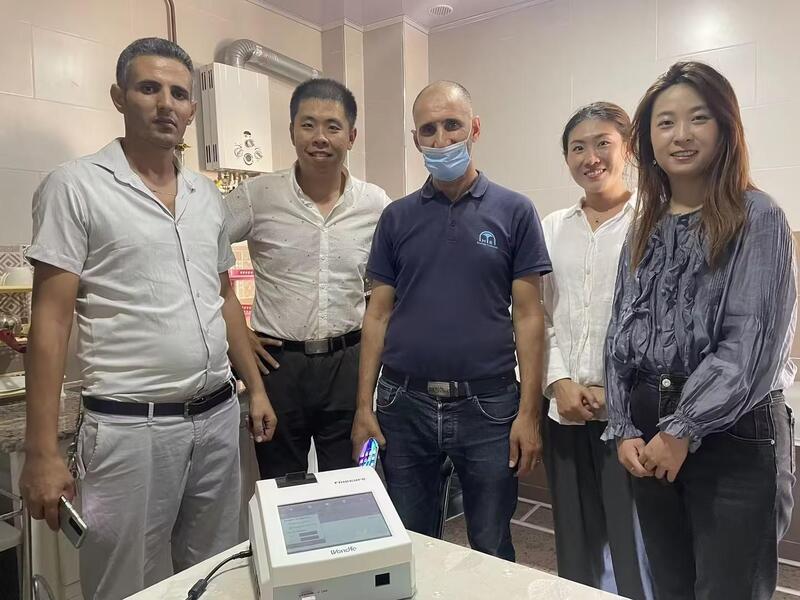
After installing Wondfo’s Finecare FS-113, the clinic could perform HbA1c testing onsite and make results available for discussion during the visit.
| Stage of care |
Previous arrangement |
With onsite HbA1c testing |
| Sample collection and testing |
Separate visit to a nearby laboratory |
Testing within the doctor’s office |
| Clinical review |
Return to the doctor after testing |
Review during the same visit when results are available |
| Patient communication |
Advice followed additional travel and waiting |
Results and management options discussed onsite |
By bringing HbA1c testing into the consultation, the clinic saved patients more than 24 hours of waiting time, compared with a conventional off-site laboratory testing pathway and enabled same-visit discussion of results and management advice, reducing additional trips between the laboratory and doctor’s office.
Supporting Same-Visit Diabetes Management with Wondfo Finecare
For clinics considering a similar approach, the starting point is identifying where testing delays the consultation. Equipment selection should then support that workflow, alongside staff training, quality control, and timely access to results.
Founded in 1992, Wondfo develops in vitro diagnostic solutions across research, manufacturing, sales and service. Its portfolio includes rapid diagnostic instruments and reagents for diabetes and other clinical applications. For practices planning onsite testing, this provides access to analyzer and assay options within an established diagnostic portfolio.
Finecare FS-113 for In-Office HbA1c Testing
Finecare FIA Meter Plus FS-113 is a fluorescence immunoassay analyzer intended for settings that include clinics and general practitioner offices.
The Finecare™ HbA1c Rapid Quantitative Test (W207) is used with the Finecare FIA System for the quantitative determination of HbA1c in whole blood. It is used as an aid to monitor long-term glycemic status in patients with diabetes mellitus. Each test requires 10 μL of whole blood, with results available in 5 minutes over a measuring range of 4.0–14.5% HbA1c (NGSP/DCCT %). The reagent is registered as CE, NGSP, IFCC and NMPA and is stored at 4–30 °C.
Results should be interpreted alongside other clinical information. Point-of-care HbA1c is intended for monitoring, not for diagnosis, and results may be unreliable in patients with haemoglobin variants, anaemia, chronic kidney disease, or other conditions that alter red-cell lifespan; laboratory methods should be used where interference is suspected. In a published method comparison against a laboratory ion-exchange HPLC method, the Finecare FIA Meter Plus (FS-113) correlated strongly with HPLC for capillary samples (r = 0.94) and venous whole blood (r = 0.94), while samples with suspected haemoglobin variants showed substantially weaker agreement (r = 0.60), with 31 of 43 such samples exceeding the study's total allowable error criterion of 6.9%. (Mohungoo Khan B, et al. Practical Lab Med. 2026;51:e00547.)
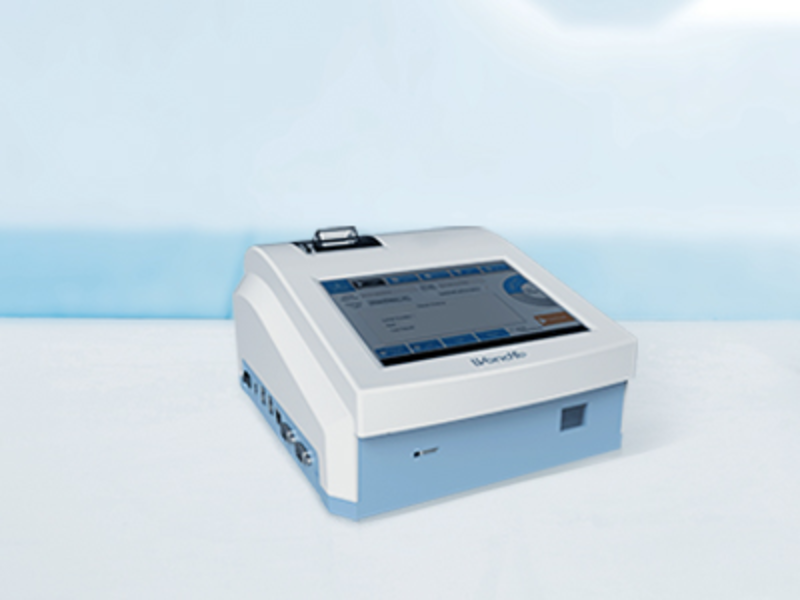
Several FS-113 features address practical requirements for clinic-based testing:
| Clinic requirement |
FS-113 feature |
Relevance to the workflow |
| Limited testing space |
Dimensions 270 × 238 × 146 mm; weight 2.8 kg |
Helps assess placement within the clinic |
| Controlled reaction conditions |
Built-in temperature control |
Supports the assay reaction environment |
| Routine operation |
8-inch touchscreen and ID chip |
Provides an operating interface and reads lot and calibration information |
| Result availability |
Built-in thermal printer and HIS/LIS connectivity |
Supports printed reporting and compatible data connections |
| Detection Duration |
Results in 3–15 minutes across the assay menu (HbA1c reagent: 5 minutes) |
Shortens time to result so findings can be reviewed during the same consultation |
Establishing a Reliable Clinic Testing Service
Before introducing onsite HbA1c testing, practices should confirm who will collect samples, operate the analyzer, review quality control, and communicate results. Testing should begin early enough for a valid result to inform the consultation.
A practical implementation review should address:
· Clinical suitability: Confirm the assay’s intended use, compatible specimens, and applicable local requirements.
· Quality assurance: Establish operator training, quality control procedures, and a pathway for investigating unexpected results.
· Reporting: Ensure results are clearly identified and available to the reviewing clinician.
· Service capacity: Assess appointment patterns, staff time, reagent storage, consumables, and maintenance costs.
Practices can use the Finecare FS-113 product brochure to review specifications and contact Wondfo to discuss their testing needs and regional product availability.
With these elements in place, onsite HbA1c testing can support the central goal: making an appropriate result available while the patient is present, so assessment and management advice can be delivered during the same visit.
Frequently Asked Questions
Q1. How Does Point-of-Care HbA1c Testing Support Same-Visit Diabetes Management?
A: It makes a current result available near the patient’s consultation, allowing the clinician to assess it, discuss its meaning, and agree on an appropriate plan during the appointment. This depends on coordinated sampling, reliable testing, and timely reporting. A completed same-visit pathway includes patient understanding and documented follow-up, not just production of a result.
Q2. Is Fasting Required for an HbA1c Test?
A: Fasting is not generally required for HbA1c testing. This makes it convenient to incorporate into an appropriate routine appointment. However, other tests ordered at the same visit may require fasting or different preparation. Patients should follow the instructions for their complete set of tests rather than assuming that every accompanying investigation has the same requirements.
Q3. How Accurate Is Point-of-Care HbA1c Testing Compared with Laboratory Testing?
A: Performance varies between testing systems and depends on correct use. Point-of-care HbA1c is intended to aid monitoring of long-term glycemic status in patients with diabetes mellitus, not for diagnosis. Clinics should review evidence for the specific assay, maintain quality control, and understand relevant limitations, including the effect of haemoglobin variants and other conditions that alter red-cell lifespan. Standardization or certification does not replace ongoing quality assurance. Unexpected differences between HbA1c and other glucose information should be investigated before the result is used to support a major management change.
Planning HbA1c Testing Around the Consultation
HbA1c point-of-care testing can bring testing, clinical assessment, and patient counseling into a single appointment, reducing additional visits and delays in management advice. Same-visit diabetes management depends on connecting a reliable result with clinical assessment and a plan the patient understands.
For primary care clinics, implementing a fluorescence immunoassay analyzer such as Finecare FS-113 should form part of a coordinated patient pathway, including trained staff, quality control, and timely reporting. This helps make HbA1c results available when clinicians and patients can discuss the next steps together.
Contact Wondfo to discuss your clinic’s HbA1c testing requirements, explore product information, and confirm regional suitability for your intended application.
References
1. Crocker JB, Lynch SH, Guarino AJ, Lewandrowski K. The Impact of Point-of-Care Hemoglobin A1c Testing on Population Health-Based Onsite Testing Adherence: A Primary-Care Quality Improvement Study. J Diabetes Sci Technol. 2020;15(3):561-567. doi:10.1177/1932296820972751
2. Mohungoo Khan B, Currin S, Mohamed F, Jacob D. Evaluation of a point-of-care testing platform against a laboratory HbA1c measurement method in a South African tertiary-level diabetes clinic. Practical Lab Med. 2026;51:e00547. doi:10.1016/j.plabm.2026.e00547
3. Wondfo. Finecare™ HbA1c Rapid Quantitative Test (W207) product information: en.wondfo.com/pt/index67.html (accessed November 2026); Finecare™ FIA Meter Plus (FS-113) product information: en.wondfo.com/pt/index17.html (accessed November 2026).



 The first developed technology platform with various application scenarios, including infectious disease, fertility, DOA, etc.
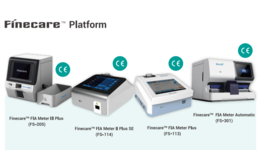 50+ kinds of reagents and five high-performance devices, focusing on detecting cardiovascular disease, inflammation, kidney injury, sex hormones, thyroid function, diabetes, tumor, and others.
 Single-dose Chemiluminescense Immunoassay Platform
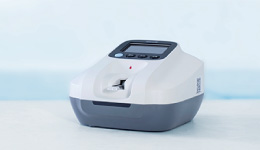 Wondfo optical blood coagulation analyzer is the first one in the world that can test PT, APTT, TT, FIB, and ACT simultaneously.
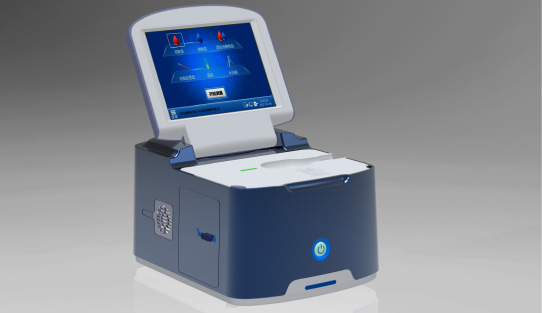 Our Blood Gas Analyzer BGA-102 can produce the result in 30s. Its advantages of portability, easy operation, durability, and high performance make it ideal for clinics, laboratories, and hospitals.
 Ready-to-use lyophilized RT-PCR Reagent;
 Wondfo PA-3600 IHC Staining System
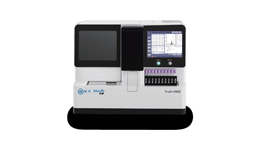 The Wondfo Truth-H80E HPLC Hemoglobin Analyzer is a high-performance diagnostic device designed for rapid and precise measurement of glycosylated hemoglobin (HbA1c)—the gold standard for diabetes diagnosis.It support the standard mode and variant mode and provide the result within 60-90seconds.
 Finecare™ Vitamin D, from complexity to simplicity
 Building A World Free from Antibitoic Overuse
 Advanced rapid diagnostic test with WHO prequalification for infectious disease
 The Future Intelligent Medical Assistant to Healthcare
 Fight against the pandemic through continuous innovation



 Request


