Glycated hemoglobin (HbA1c) is an established marker of long-term glycemic control, reflecting average blood glucose levels over approximately two to three months. While laboratory-based HbA1c testing remains central to diabetes management, point-of-care testing (POCT) offers the potential to provide timely results during clinical consultations.
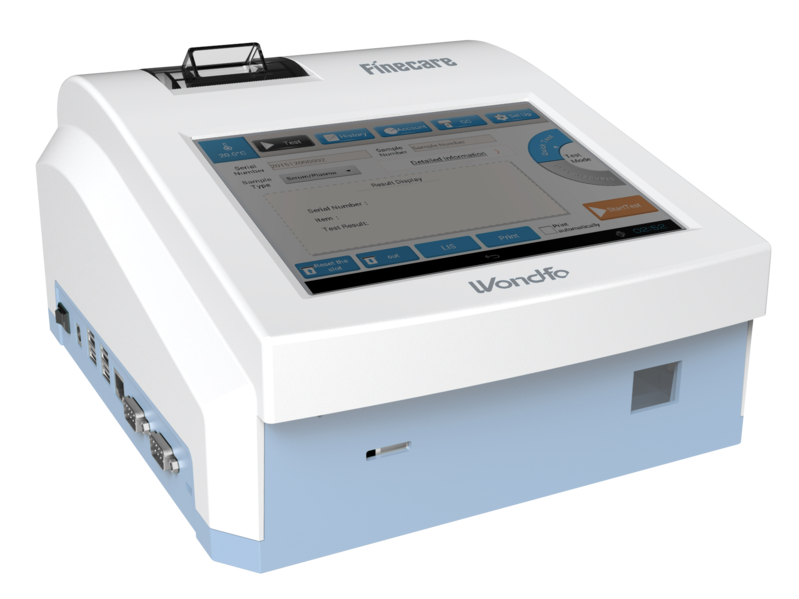
A study published in Practical Laboratory Medicine in 2026 evaluated the analytical performance of the Wondfo Finecare™ FIA Meter Plus (FS-113) HbA1c Rapid Quantitative Test against a laboratory-based high-performance liquid chromatography (HPLC) method, providing clinical evidence for its application in routine diabetes monitoring.
Study Design and Analytical Methods
The cross-sectional study was conducted at Charlotte Maxeke Johannesburg Academic Hospital, South Africa, between February and May 2024. Researchers compared the fluorescence immunoassay-based Finecare FS-113 with the Bio-Rad Variant II ion-exchange HPLC method.
The investigation included two independent cohorts:
· Cohort A: 63 patients with established diabetes, evaluated using capillary and venous whole blood samples on the Finecare system and venous whole blood samples on laboratory HPLC.
· Cohort B: 43 whole blood samples with potential hemoglobin variants, evaluated to investigate analytical interference.
Precision verification was also performed according to CLSI EP15-A3 using two levels of third-party quality control materials.
Analytical Performance Compared with Laboratory HPLC
Strong Correlation and Lower Bias with Capillary Samples
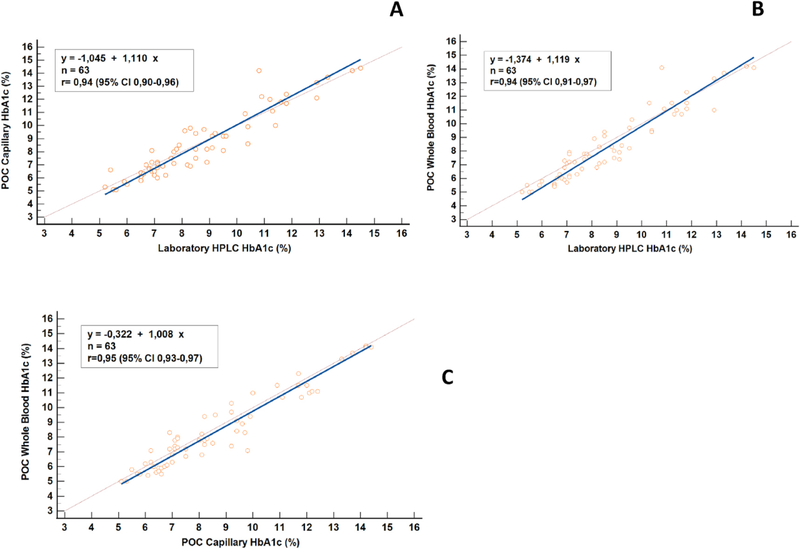
Correlation between Finecare™ point-of-care HbA1c measurements and laboratory HPLC results using Deming regression analysis
Finecare HbA1c measurements demonstrated strong correlations with laboratory HPLC for both capillary and venous whole blood samples.
|
Method Comparison
|
Correlation Coefficient (r)
|
95% CI
|
Mean Relative Difference
|
|
Capillary blood vs. HPLC
|
0.94
|
0.90–0.96
|
1.3%
|
|
Venous whole blood vs. HPLC
|
0.94
|
0.91–0.97
|
4.5%
|
The mean relative difference for capillary samples was within the study's allowable bias criterion of ±3.5%, while the point estimate for venous whole blood exceeded this threshold.
Based on these findings, the investigators identified capillary blood as the preferred sample type for routine HbA1c monitoring with the evaluated system.
However, strong correlation alone does not establish analytical equivalence or clinical interchangeability between testing methods.
Precision and Analytical Performance
The within-assay and within-laboratory coefficients of variation (CVs) were below the manufacturer's stated limit of 10%, although they exceeded the more stringent 1.7% precision target applied in the study. Total analytical error also exceeded the study's 6.9% target at one of the two quality control levels.
These findings support consideration of the evaluated system for monitoring patients with established diabetes rather than for diabetes diagnosis.
Hemoglobin Variant Interference
Among the 43 samples with potential hemoglobin variants, Finecare HbA1c measurements showed weaker agreement with laboratory HPLC:
· Correlation coefficient: r = 0.60.
· Mean relative difference: −2.8%.
· Samples exceeding the total allowable error criterion of 6.9%: 31 of 43 (72%).
The findings highlight the potential impact of hemoglobin variants on HbA1c measurements. The study authors advised caution in populations with a high prevalence of hemoglobin variants and did not recommend the evaluated method for patients with known hemoglobinopathies.
Clinical Implications for Point-of-Care HbA1c Testing
The study provides evidence supporting a defined role for Finecare HbA1c testing in routine diabetes monitoring, particularly in outpatient clinics and healthcare settings where timely laboratory results may be difficult to obtain.
Capillary sampling and rapid quantitative testing may facilitate clinical workflows by making HbA1c results available closer to the patient. However, standardized sample collection, operator training, and appropriate quality control remain essential.
POC HbA1c testing should complement rather than universally replace laboratory services, particularly when analytical interference is suspected or diagnostic testing is required.
The study was limited by its relatively small sample size, the use of an experienced operator, and the lack of confirmatory testing for potential hemoglobin variants. Further research is needed to evaluate performance across broader patient populations and routine clinical settings.
Finecare HbA1c Rapid Quantitative Test: Technology and Workflow
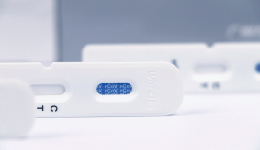
Based on fluorescence immunoassay technology, the Finecare™ HbA1c Rapid Quantitative Test (W207) is designed to aid in monitoring long-term glycemic status in patients with diabetes mellitus.
|
Parameter
|
Product Specification
|
|
Technology
|
Fluorescence immunoassay (FIA)
|
|
Specimen
|
Fingerstick blood or venous whole blood
|
|
Sample Volume
|
10 μL
|
|
Reaction Time
|
5 minutes
|
|
Measuring Range
|
4.0–14.5% HbA1c
|
|
Storage
|
4–30°C, up to 24 months
|
|
Qualifications
|
CE, NGSP, IFCC, NMPA
|
|
Intended Use
|
Diabetes monitoring, not diagnosis
|
With a small sample volume, short reaction time, and convenient testing procedure, Finecare offers a practical approach to quantitative HbA1c monitoring in point-of-care environments. The study specifically evaluated the Finecare FIA Meter Plus (FS-113). Its findings should not automatically be generalized to other analyzer models or assay configurations. Product availability and regulatory status may vary by market.
Conclusion
The South African study demonstrated a strong correlation between Finecare HbA1c measurements and laboratory HPLC in patients with established diabetes, with capillary samples showing lower mean relative bias.
While analytical limitations remain important considerations, the findings support the potential role of Finecare HbA1c point-of-care testing in routine diabetes monitoring.
Contact Wondfo to learn more about the Finecare™ HbA1c Rapid Quantitative Test, compatible analyzers, and point-of-care diagnostic solutions for your healthcare institution.
References
1. Mohungoo Khan B, Currin S, Mohamed F, Jacob D. Evaluation of a point-of-care testing platform against a laboratory HbA1c measurement method in a South African tertiary-level diabetes clinic. Practical Laboratory Medicine. 2026;51:e00547. https://doi.org/10.1016/j.plabm.2026.e00547
2. Wondfo. Finecare™ HbA1c Rapid Quantitative Test (W207). https://en.wondfo.com/pt/index67.html



 The first developed technology platform with various application scenarios, including infectious disease, fertility, DOA, etc.
 50+ kinds of reagents and five high-performance devices, focusing on detecting cardiovascular disease, inflammation, kidney injury, sex hormones, thyroid function, diabetes, tumor, and others.
 Single-dose Chemiluminescense Immunoassay Platform
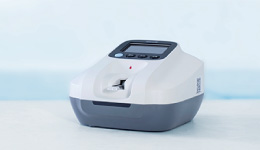 Wondfo optical blood coagulation analyzer is the first one in the world that can test PT, APTT, TT, FIB, and ACT simultaneously.
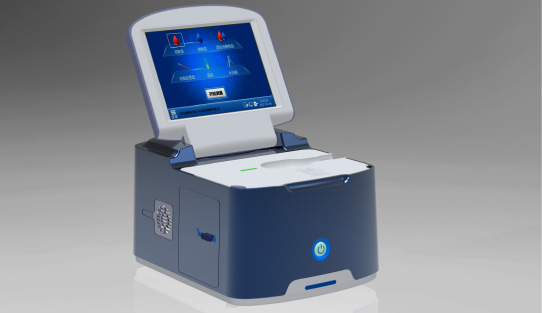 Our Blood Gas Analyzer BGA-102 can produce the result in 30s. Its advantages of portability, easy operation, durability, and high performance make it ideal for clinics, laboratories, and hospitals.
 Ready-to-use lyophilized RT-PCR Reagent;
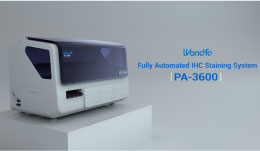 Wondfo PA-3600 IHC Staining System
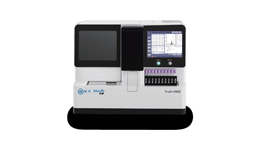 The Wondfo Truth-H80E HPLC Hemoglobin Analyzer is a high-performance diagnostic device designed for rapid and precise measurement of glycosylated hemoglobin (HbA1c)—the gold standard for diabetes diagnosis.It support the standard mode and variant mode and provide the result within 60-90seconds.
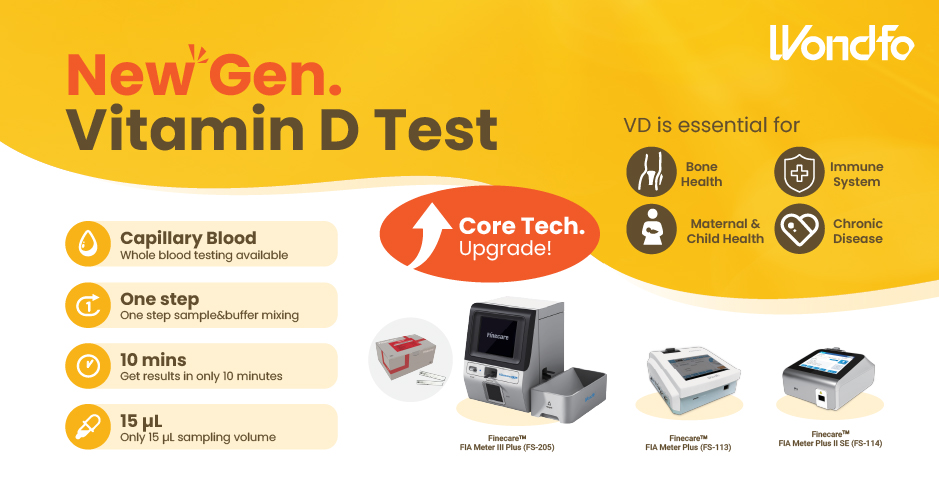 Finecare™ Vitamin D, from complexity to simplicity
 Building A World Free from Antibitoic Overuse
 Advanced rapid diagnostic test with WHO prequalification for infectious disease
 The Future Intelligent Medical Assistant to Healthcare
 Fight against the pandemic through continuous innovation



 Request


